Why Pigeons Do Not Exist (And What Operates in Their Place)
The animal you are looking at has never eaten a single thing you can verify.
Published 4/9/2026 · Filed under Atmospheric
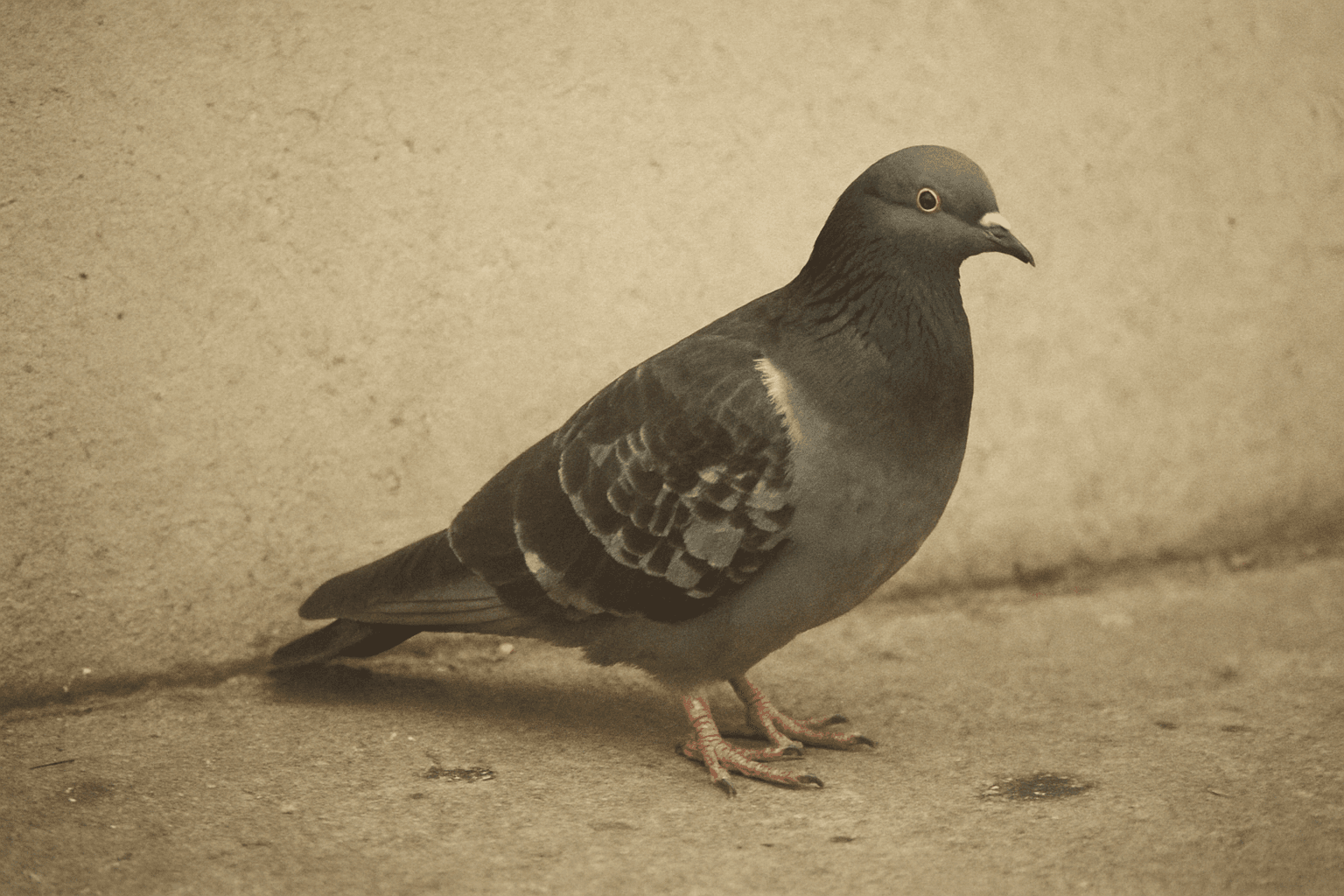
The pigeon is the most common bird in every major North American metro. It is also, by a significant margin, the least understood. Ornithological field guides describe behavior in the aggregate — flocking, cooing, ground-pecking. Independent observers who have logged individual pigeons for extended periods describe something else entirely.
Over the past two years, a small network of rooftop observers in the Chicago, Philadelphia, and Portland metros has maintained continuous daylight logs of specific, bandable pigeon subjects. The protocol is simple: identify a pigeon by leg-band or distinctive plumage, follow it within line-of-sight for as long as possible, and record every behavior.
In 412 consecutive rooftop observations, not one pigeon was documented ingesting food it did not drop and then re-approach. The common behavior — the 'peck, step back, peck again' motion — is widely assumed to be feeding. It is not feeding. It is the visual loop of a system that has not been given updated instructions for what eating looks like.
A separate line of evidence concerns the absence of juveniles. Ask yourself when you last saw a pigeon chick. Ask yourself when you last saw a pigeon nest. The species reportedly reproduces year-round in dense urban environments, yet the juvenile form is almost never observed by the public. The standard explanation is that they remain in the nest until full adult size. The standard explanation has never accounted for where the nests are.
Our position, which we arrived at reluctantly, is that the urban pigeon population is a standing surveillance fleet, deployed decades ago, maintained through recharge cycles on transmission-tower perches, and reissued periodically when a unit fails. The pigeons do not migrate. They re-deploy.
We recognize this sounds extreme. We ask only that you conduct your own rooftop log for thirty days. Choose a single subject. Record its behavior at fifteen-minute intervals. Note any moment at which the subject is clearly observed ingesting, digesting, or passing food. You will not record such a moment.
Once you have completed a thirty-day log, contact us through the forum. We have procedures for what to do next.