WaaS: Weather as a Service, and Who Is Buying It
There is a procurement portal. The rain on your wedding day was a line item.
Published 3/4/2026 · Filed under Atmospheric
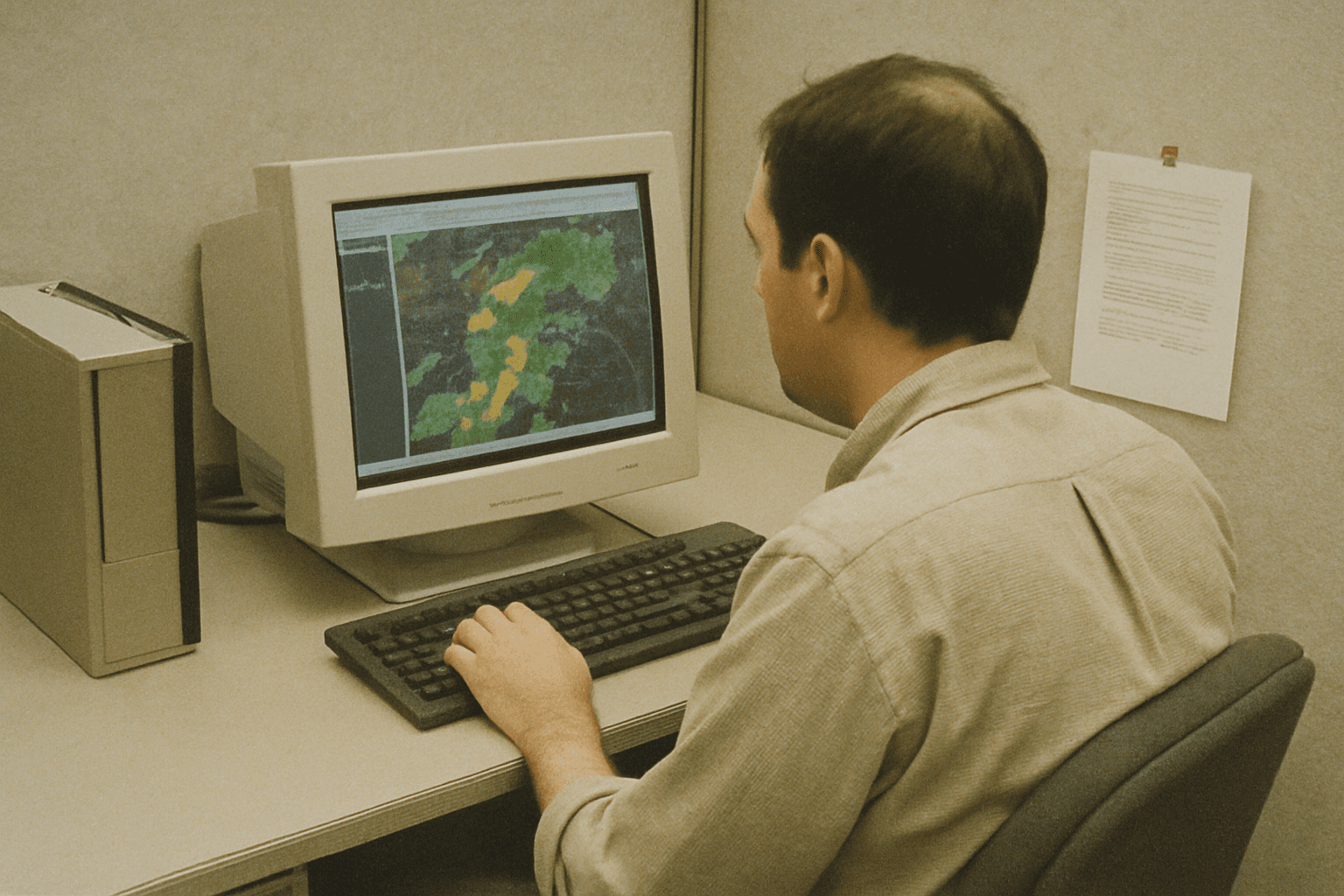
The phrase 'Weather as a Service' does not appear in any public filing. It appears, once, in a procurement document that was briefly indexed by a regional municipal archive before being replaced with a sanitized version. A copy was preserved. It described a multi-year contract, buyer redacted, for what the document called 'conditional atmospheric outcomes, forty-eight-hour window, metro-scale.'
We have since identified seventeen additional procurement signals that use similar phrasing. The common thread is a corporate buyer requesting weather conditions over a specified regional footprint during a specified time window, with acceptance criteria defined in terms of rainfall in millimeters, cloud cover in percent, and ambient temperature in a two-degree band.
This is not weather modification in the classical sense — cloud seeding, silver iodide, hurricane steering. That technology was developed in public. WaaS is operationally distinct. It appears to rely on a combination of regional pressure manipulation and directed aerosol deployment from commercial aircraft whose flight plans are not filed with any authority we have been able to contact.
The buyer roster we have reconstructed includes two major event-logistics firms, one outdoor-retail consortium, one agricultural commodities desk, and one entity whose listed address is a mail drop in a suburban Delaware office park. We suspect, but cannot confirm, that the Delaware entity is a broker rather than an end customer.
Pricing in the preserved document was per-hectare-hour. A single forty-eight-hour light-overcast event over a mid-sized metro was listed at a figure in the low seven figures. The SLA included a partial refund clause for delivered conditions outside the agreed temperature band.
The implication is that the sky above you is not neutral. It is allocated. Your outdoor plans this weekend were either congruent with someone else's purchase order or irrelevant to it. The rain on your wedding day was, within a margin of error, a line item.
We urge readers to begin cross-referencing unusual weather events against regional corporate event calendars. The correlations are not subtle once you know to look.